

SensorLab at Jozef Stefan Institute
We are advancing the state of the art in smart infrastructure and pushing the boundaries of AI and data-driven technologies to enable intelligent, adaptive, and sustainable systems.
Agentic AI & Multi-Agent LLM Systems
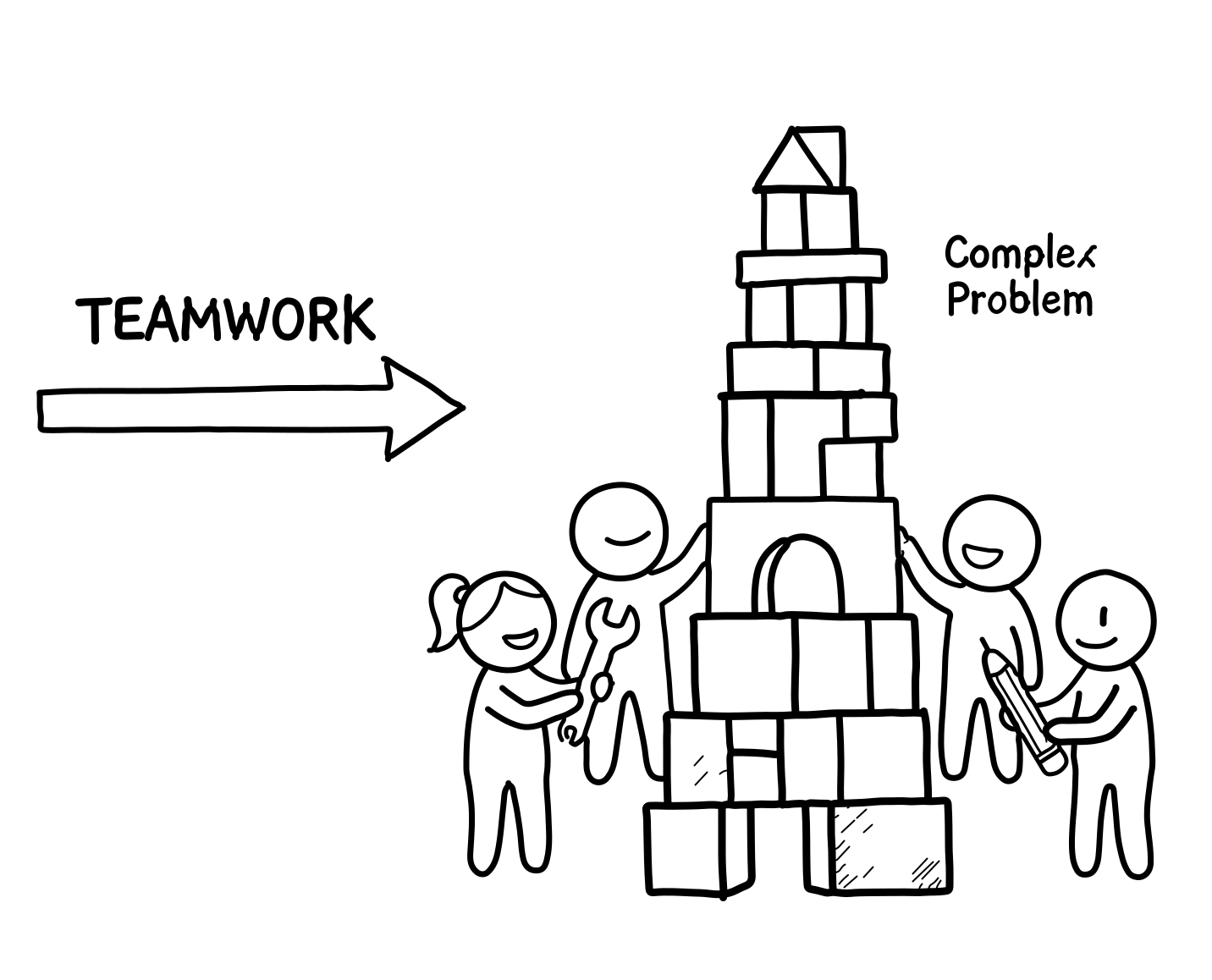
We study how teams of LLMs fail and succeed when scaled. The Cost of Consensus shows that isolated self-correction outperforms unguided homogeneous debate, and our forthcoming scaling law sorts any multi-agent configuration into …
We study how teams of LLMs fail and succeed when scaled. The Cost of Consensus shows that isolated self-correction outperforms unguided homogeneous debate, and our forthcoming scaling law sorts any multi-agent configuration into hard-ceiling, sublinear or linear regimes — predicting the ceiling of 30-agent teams from a 5-agent pilot. Open code: llm-debate-dynamics.
Energy Cost of AI Lifecycle
As AI moves deep into communication networks, its energy and carbon footprint become first-class engineering concerns. We characterize and quantify the energy cost of the AI lifecycle in communication networks, with a dedicated study of the …
As AI moves deep into communication networks, its energy and carbon footprint become first-class engineering concerns. We characterize and quantify the energy cost of the AI lifecycle in communication networks, with a dedicated study of the energy cost of the AI/ML workflow in O-RAN and a roadmap towards the standardization of energy-efficiency metrics for the AI lifecycle in 6G and beyond. To make these metrics actionable, we build practical tooling such as the eCAL simulator and the AI-Energy-Sandbox so other groups can measure, compare and reduce the footprint of their own AI services.
Smart Grid & Energy AI
Smart grids are one of the most demanding settings for data-driven control: heterogeneous data, hard physical constraints and strong economic incentives. Our work here spans the full stack — from multi-agent deep reinforcement learning that …
Smart grids are one of the most demanding settings for data-driven control: heterogeneous data, hard physical constraints and strong economic incentives. Our work here spans the full stack — from multi-agent deep reinforcement learning that minimizes cost in energy communities and improves energy autonomy of positive energy districts, through smart V2G charging with shared energy storage, to the data infrastructure underneath: a multi-region electricity knowledge graph and natural-language interaction with a household electricity digital twin. All deliverables are released as open datasets and code.
Anomaly Detection
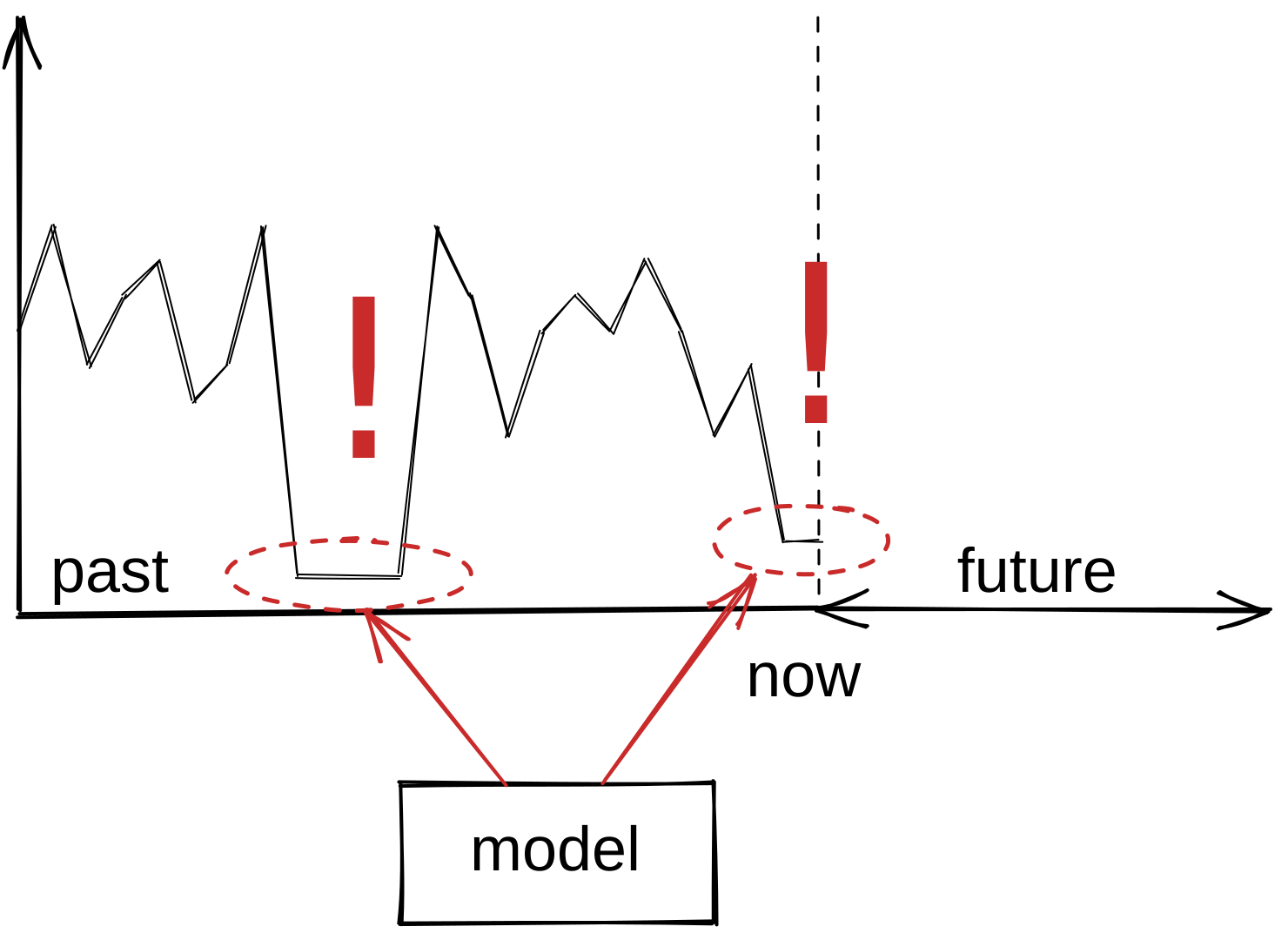
Time series anomaly detection remains a key challenge for developing, maintaining and monitoring smart infrastructures. Our early contributions defined four types of wireless link anomalies and introduced time-series-to-image …
Time series anomaly detection remains a key challenge for developing, maintaining and monitoring smart infrastructures. Our early contributions defined four types of wireless link anomalies and introduced time-series-to-image transformations to advance detection performance. More recently we have moved to graph-based methods, with a visibility-graph approach for digital-twin edge networks and an explainable semantic characterization of anomalies for digital twins that turns black-box detectors into interpretable monitoring tools.
Wireless Link Reliability
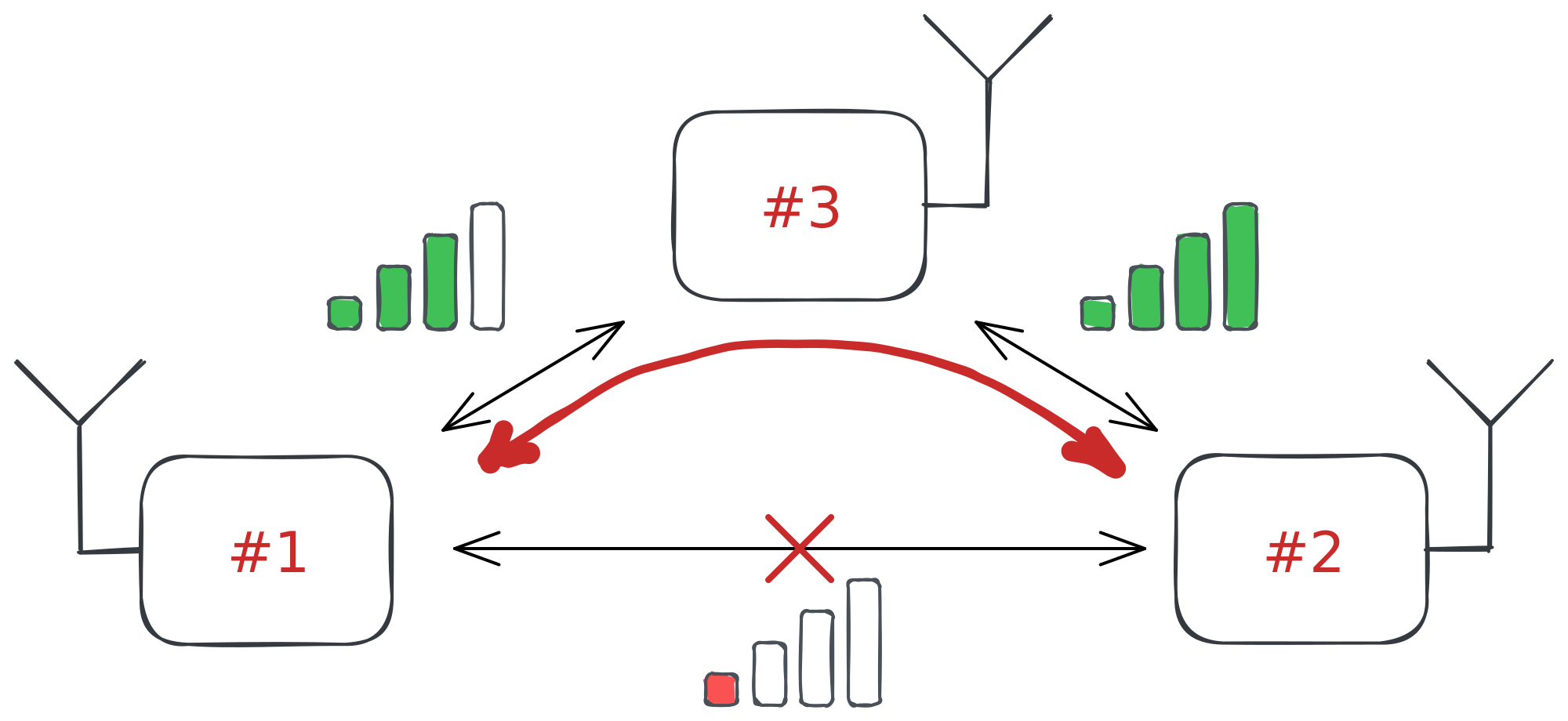
Wireless links are crucial for cost-efficiently connecting components in smart infrastructures, and machine learning has proved well suited to estimating and classifying their quality. Our comprehensive survey on data-driven link quality …
Wireless links are crucial for cost-efficiently connecting components in smart infrastructures, and machine learning has proved well suited to estimating and classifying their quality. Our comprehensive survey on data-driven link quality estimation analyzes ML-based LQE from both application-requirement and ML-design-process perspectives. Building on that foundation, recent work tackles a problem that has become central as networks evolve towards 6G: maintaining reliability when the data distribution shifts. We have proposed a representation-learning approach to feature drift detection in wireless networks and a broader framework for detecting concept drift in wireless networks.
Time Series Classification & Segmentation
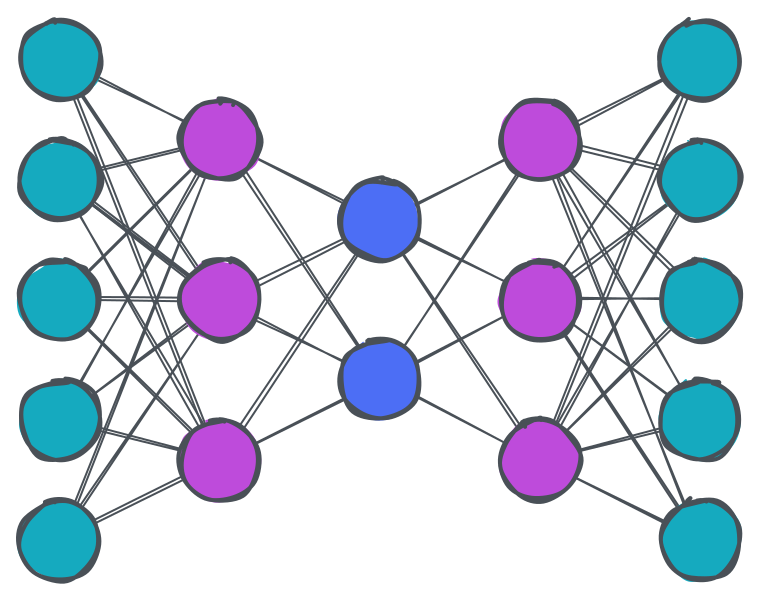
Automatic classification and segmentation of time series underpin many smart-infrastructure applications. Our early appliance-classification work using shallow and deep ML is available as a CaaS service. Building on this, CARMEL captures …
Automatic classification and segmentation of time series underpin many smart-infrastructure applications. Our early appliance-classification work using shallow and deep ML is available as a CaaS service. Building on this, CARMEL captures spatio-temporal correlations via time-series sub-window imaging and our energy-efficient deep multi-label on/off classifier makes such models deployable on low-frequency metered devices. We are now exploring inherently interpretable architectures with Kolmogorov–Arnold Networks for time-series classification, and a network-science approach to granular time-series segmentation based on visibility graphs and community detection.
Wireless Localization & Radio Mapping
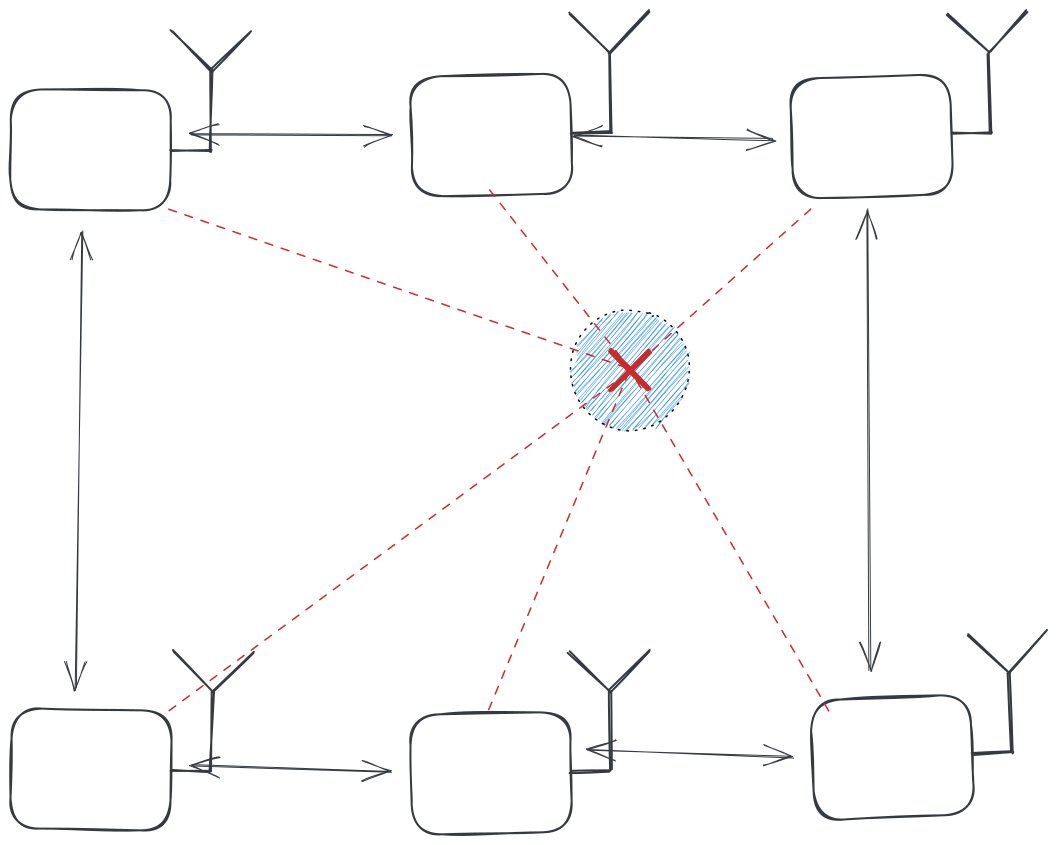
Location-based services are now an inevitable part of emerging wireless infrastructures and business processes. Deep learning methods perform very well in wireless fingerprinting localization, and our work has produced datasets and …
Location-based services are now an inevitable part of emerging wireless infrastructures and business processes. Deep learning methods perform very well in wireless fingerprinting localization, and our work has produced datasets and pipelines based on LOG-a-TEC traces. Recent contributions broaden this in three directions: cross-technology localization with interpretable ML models, a configuration-first framework for reproducible, low-code localization, and a new indoor radio mapping dataset combining 3D point clouds and RSSI. We are also building learned elevation models as a lightweight alternative to LiDAR for radio-environment-map estimation.
MLOps
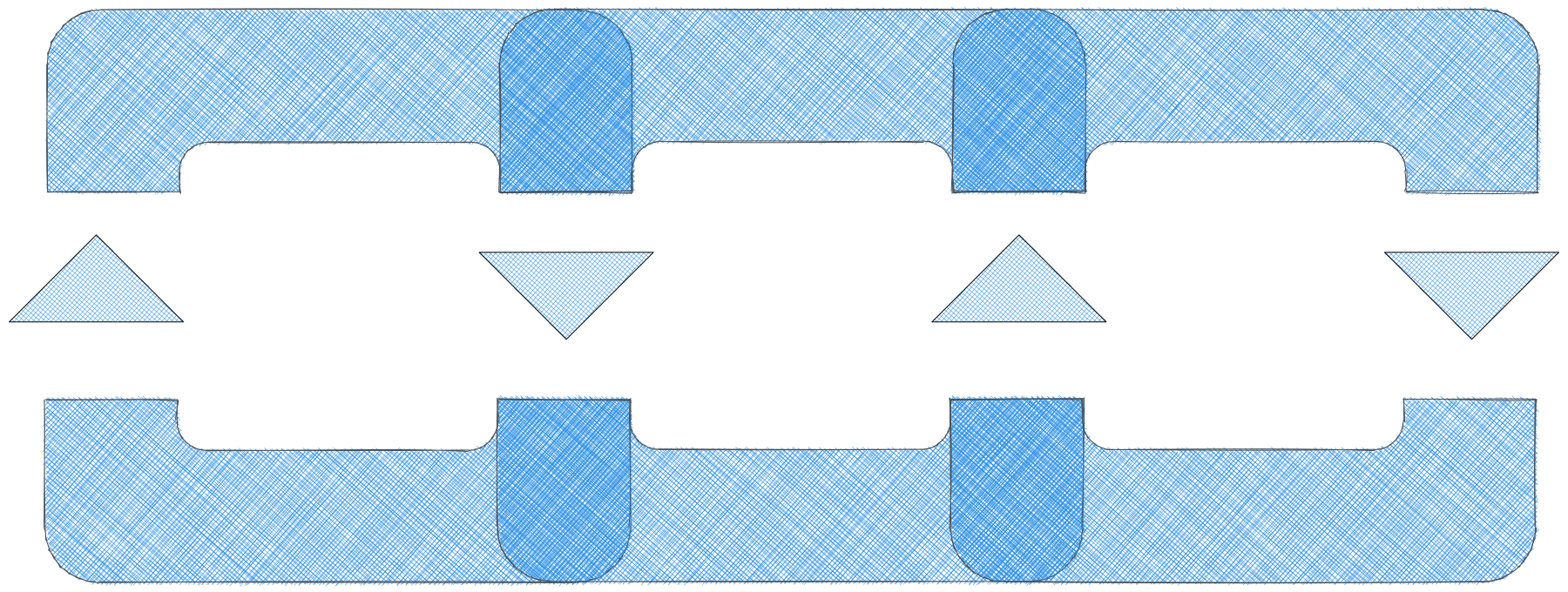
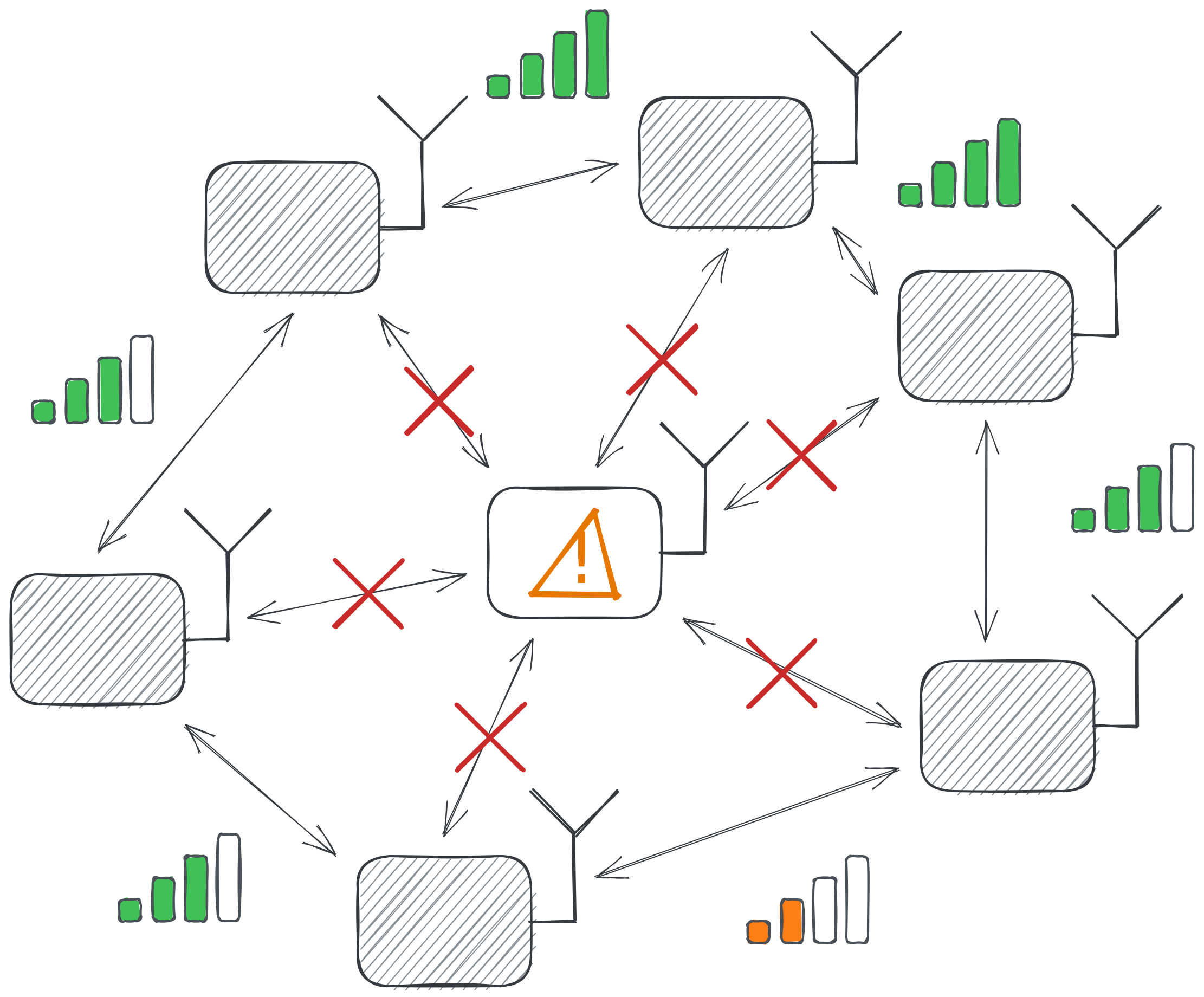
We research end-to-end MLOps pipelines to design, build, deploy and govern ML models for network and infrastructure applications. Our work includes an overview and concrete solution for democratizing AI workflows at the network edge, the …
We research end-to-end MLOps pipelines to design, build, deploy and govern ML models for network and infrastructure applications. Our work includes an overview and concrete solution for democratizing AI workflows at the network edge, the O-RAN AI/ML workflow architecture and framework, and MRM3, a machine-readable metadata standard for ML models that makes model assets discoverable and reusable across teams. Underlying these is our work on lightweight on-premise PaaS for digital transformation, so small and medium-size organizations can operate the same workflows as hyperscalers.
Edge–cloud Automation & Orchestration
We pioneered continuous integration for embedded development with the COINS framework, evaluated on LOG-a-TEC, and worked on efficient zero-touch device provisioning. Today we extend that line into the AI-driven orchestration of distributed …
We pioneered continuous integration for embedded development with the COINS framework, evaluated on LOG-a-TEC, and worked on efficient zero-touch device provisioning. Today we extend that line into the AI-driven orchestration of distributed services across the edge–cloud continuum: a multi-agent reinforcement-learning in-place scaling engine for edge-cloud systems, demonstrated as smart scaling of AI services for future networks, an analysis of AI techniques for orchestrating edge-cloud application migration, and the Smart Highway zero-touch service management framework for automotive services.
Experimental Infrastructure
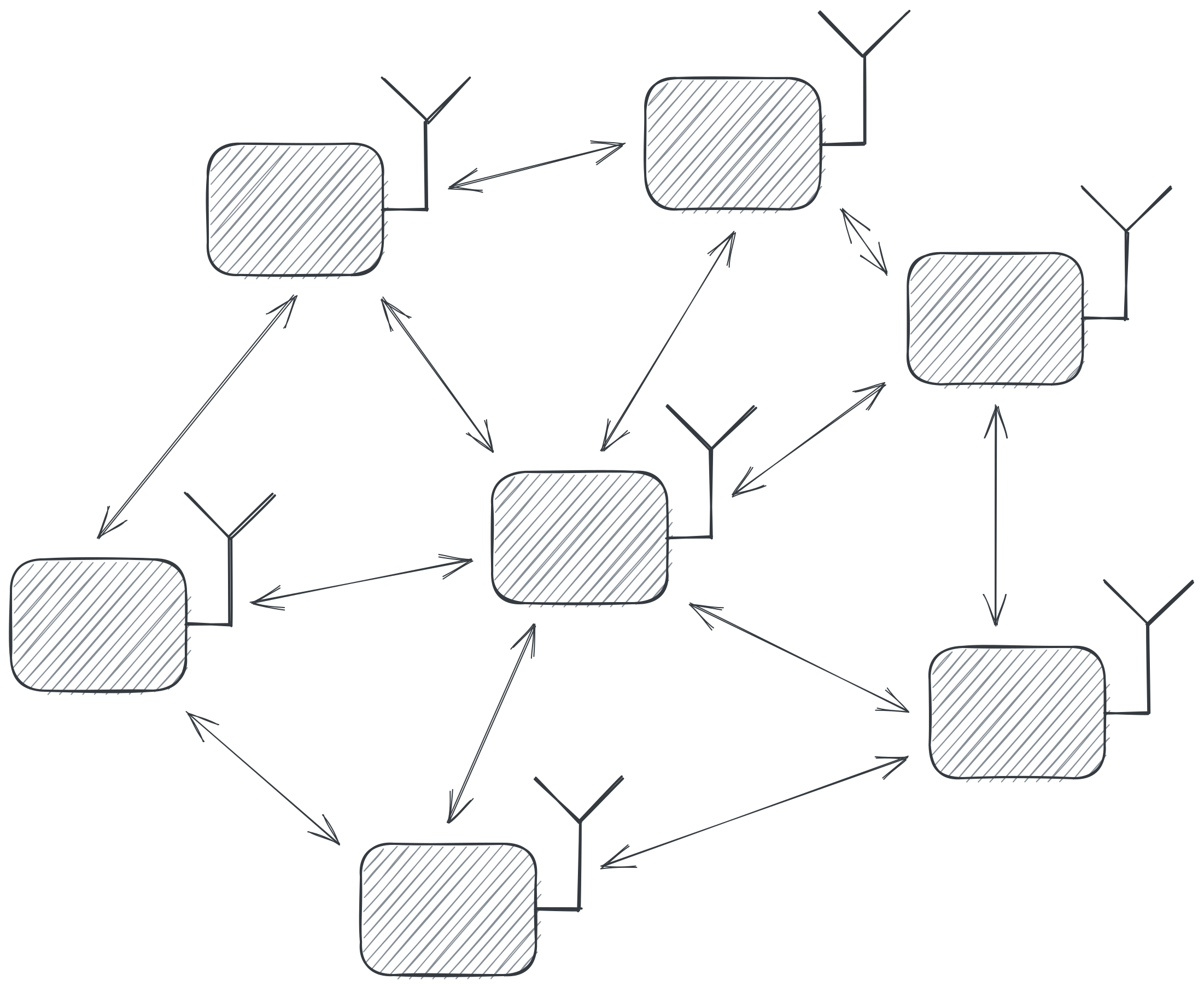
We developed the LOG-a-TEC experimental infrastructure for outdoor and indoor experimentation with ultra-narrow-band and ultra-wide-band radios, packet-based experimentation, clean-slate protocol design, composable modular protocol stacks, …
We developed the LOG-a-TEC experimental infrastructure for outdoor and indoor experimentation with ultra-narrow-band and ultra-wide-band radios, packet-based experimentation, clean-slate protocol design, composable modular protocol stacks, and advanced spectrum sensing and signal generation in sub-GHz spectrum. Beyond LOG-a-TEC, we run targeted measurement campaigns that have produced new public datasets, including a comprehensive GNSS dataset from a ship expedition to Antarctica for studying interference in polar regions, and indoor radio mapping with combined 3D point clouds and RSSI.

Open Science
We are committed to open-science principles and make our early work available as arXiv pre-prints, with openly accessible versions of our peer-reviewed papers, datasets and code. Recent open releases include the Antarctica GNSS dataset, the …
We are committed to open-science principles and make our early work available as arXiv pre-prints, with openly accessible versions of our peer-reviewed papers, datasets and code. Recent open releases include the Antarctica GNSS dataset, the multi-region electricity knowledge graph for data-driven electricity management, and the indoor radio mapping dataset combining 3D point clouds and RSSI — all published in Scientific Data or as open pre-prints with reproducible pipelines on GitHub.
Education and Knowledge Transfer
We offer various activities targeting education and knowledge transfer. Through our work with undergraduate, graduate and post-graduate students on individual cutting edge projects and their theses, we make sure they are better prepared for …
We offer various activities targeting education and knowledge transfer. Through our work with undergraduate, graduate and post-graduate students on individual cutting edge projects and their theses, we make sure they are better prepared for the market needs. We also organize summer schools, tutorials at conferences and locally in collaboration with the University of Ljubljana and the Jozef Stefan Internation Postgraduate School. For general practitioners and decision makers we also reccommend the edited book The Internet of Things: From Data to Insight.